In the high-pressure environment of the Indian hospitality sector, the cost of energy is no longer just an operational expense, it is a strategic vulnerability. As geopolitical tensions in the Middle East continue to simmer, the global supply chain for Liquefied Petroleum Gas (LPG) remains precariously balanced. For Indian restaurateurs and commercial kitchen managers, this translates to unpredictable price hikes and potential supply disruptions. The solution to this instability lies not in better procurement, but in biogas for commercial kitchens India, a decentralized energy model that transforms waste into a primary resource.
The Vulnerability of LPG: Why India Needs a Decentralized Energy Shift
India is one of the world's largest importers of LPG, with a significant portion of its domestic and commercial supply originating from the volatile Middle Eastern corridor. Any disruption in the Strait of Hormuz or shifts in OPEC+ production quotas ripple through the Indian economy within days. For a business that relies on a steady flame to serve hundreds of customers, this dependence is a critical risk factor.
Geopolitics and the Rising Cost of LPG
The pricing of commercial LPG cylinders in India is linked to international benchmarks. When global crude prices spike due to conflict or trade embargoes, the Indian government often prioritizes domestic subsidies, leaving commercial entities to bear the brunt of market-linked pricing. This volatility makes long-term financial planning nearly impossible for small to medium-sized enterprises (MSMEs) in the food industry. By integrating renewable energy strategies, businesses can insulate themselves from these external shocks.
The Risk of Supply Chain Disruptions for High-Volume Users
Beyond price, the physical availability of fuel is a concern. High-volume users like hotel chains and industrial canteens require frequent deliveries. A transport strike, a logistics bottleneck, or a national shortage can bring operations to a grinding halt. Transitioning to decentralized energy solutions for households and businesses ensures that the source of power is located exactly where it is consumed, eliminating the middleman and the delivery truck.
Biogas for Commercial Kitchens India: The Practical Alternative
Biogas is a clean, renewable, and carbon-neutral fuel produced through the natural breakdown of organic matter. In the context of the Indian market, it represents a perfect marriage between waste management and energy production. Unlike solar or wind, which are intermittent, biogas provides a consistent, 24/7 supply of methane that can directly replace or supplement LPG in existing kitchen setups.
Methane vs Propane: Performance in the Kitchen
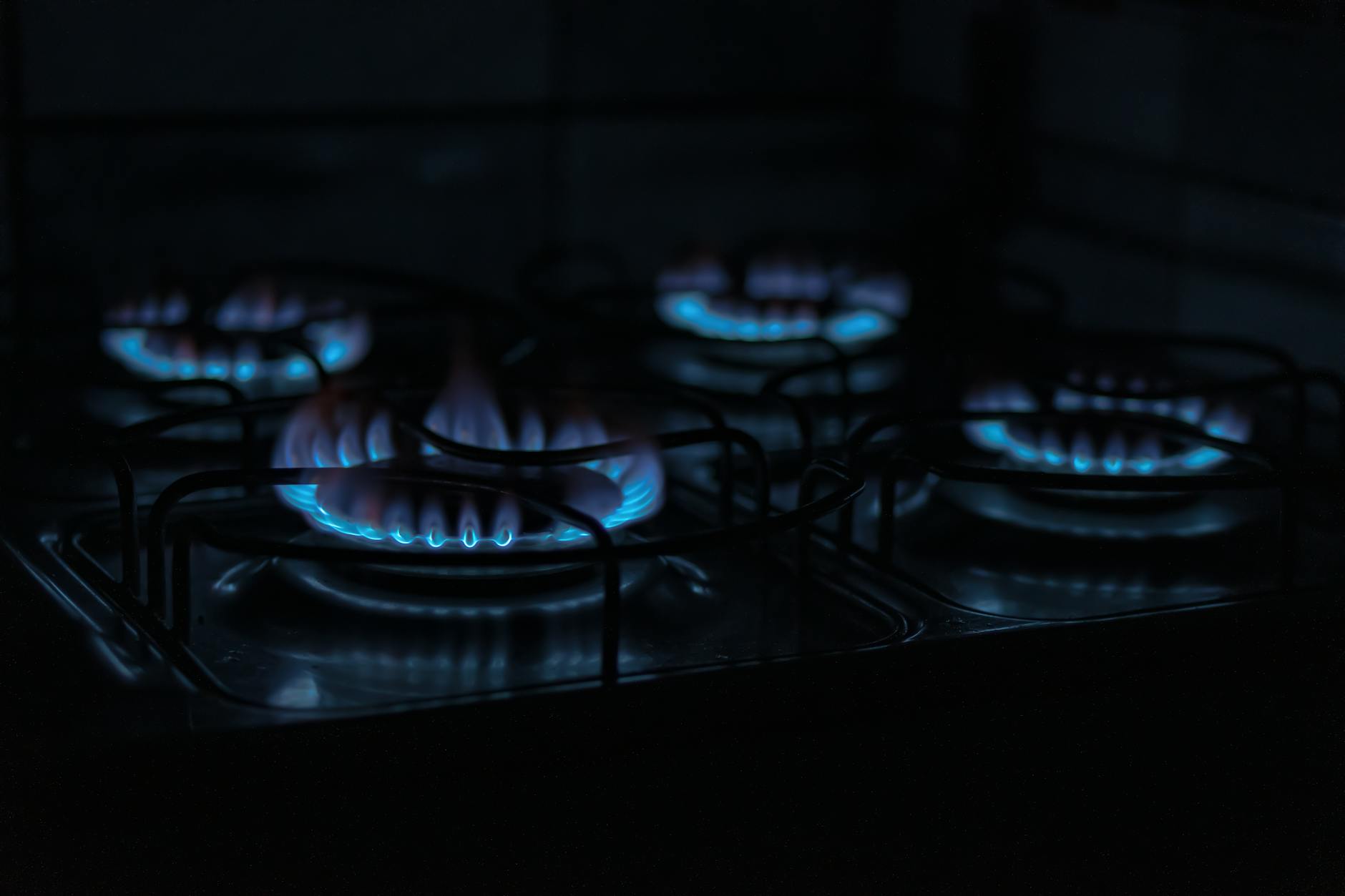
LPG is primarily a mix of propane and butane, while biogas is roughly 60 percent methane and 40 percent carbon dioxide. While LPG has a higher calorific value per unit of volume, biogas burners are specifically designed to optimize the blue flame for commercial cooking. Chefs who have transitioned to biogas report no significant difference in cooking times or heat intensity, provided the burner jets are correctly calibrated for the gas flow. This makes it a highly viable sustainable cooking fuel alternative for heavy-duty frying, boiling, and simmering.
The Science of Anaerobic Digestion Simplified
The heart of a biogas system is the anaerobic digester. This is a sealed, oxygen-free tank where specialized bacteria consume organic waste. The process, known as anaerobic digestion, occurs in four stages: hydrolysis, acidogenesis, acetogenesis, and methanogenesis. The result is a steady stream of biogas captured at the top of the tank and a nutrient-rich liquid slurry at the bottom. For a restaurant, this means that the very food scraps that were once a disposal headache now become the fuel that cooks the next meal.

Organic Waste to Energy for Restaurants: Turning Disposal Costs into Fuel
One of the most compelling arguments for organic waste to energy for restaurants is the dual savings. Currently, most Indian commercial kitchens pay a fee to municipal corporations or private contractors to haul away their wet waste. By installing an on-site digester, these businesses eliminate disposal fees while simultaneously reducing their monthly fuel bill.
Feedstock Sources: Kitchen Scraps, Market Waste, and Sludge
The versatility of feedstock is a major advantage. A typical Indian commercial kitchen generates a variety of waste types that are ideal for biogas production, including:
- Vegetable and fruit peels.
- Leftover cooked food (rice, lentils, breads).
- Spoiled dairy products.
- Fats, oils, and grease (FOG) from grease traps.
- Non-edible parts of meat and poultry.
By implementing effective waste management strategies for Indian MSMEs, a kitchen can ensure a consistent feedstock supply, which is critical for maintaining the bacterial health of the digester.
Scaling from Small Cafes to Large Commercial Chains
Biogas technology is modular. A small cafe might utilize a 2-cubic-meter digester that fits in a backyard or a dedicated corner of a parking lot. In contrast, large hotel chains or corporate canteens can install industrial-scale plants capable of processing hundreds of kilograms of waste daily. The scalability ensures that renewable energy independence India is achievable for businesses of all sizes.
LPG vs Biogas Cost Comparison: The Financial Case for Transition
When evaluating the LPG vs biogas cost comparison, it is essential to look beyond the initial price tag. While a biogas system requires an upfront investment, its operational costs are near zero, as the fuel source is essentially free waste.
Initial Capital Expenditure vs Long-term Operational Savings
A commercial-grade biogas system for a medium-sized restaurant (processing 25-50 kg of waste per day) can cost between 1.5 lakh to 4 lakh INR, depending on the technology and automation level. Considering that a single commercial LPG cylinder now costs upwards of 1,700 to 2,000 INR, a restaurant using two cylinders a day spends over 12 lakh INR annually on fuel. With a biogas system providing even 30 to 40 percent of the total energy needs, the return on investment (ROI) is often achieved within 18 to 24 months.
Government Subsidies and Incentives for Renewable Energy in India
The Ministry of New and Renewable Energy (MNRE) offers various incentives for waste-to-energy projects. Under the Waste to Energy Programme, businesses can avail of central financial assistance (CFA) for setting up biogas plants. Additionally, many state governments provide tax exemptions and simplified permitting processes to encourage kitchen waste management for business. For a detailed breakdown, business owners should consult a guide to renewable energy subsidies in India to maximize their initial savings.
Implementing Anaerobic Digestion for Urban Homes
While the commercial sector sees the fastest ROI, anaerobic digestion for urban homes is gaining traction in cities like Bangalore, Mumbai, and Pune. High-rise residents and independent villa owners are looking for ways to reduce their carbon footprint while ensuring a backup cooking fuel source.
Home Biogas Plant Cost India: Entry Level Options
The home biogas plant cost India has dropped significantly with the arrival of prefabricated, plug-and-play models. A basic 1-cubic-meter unit, suitable for a family of four, can be purchased for approximately 25,000 to 40,000 INR. These units are designed to be compact, often fitting on a terrace or in a small garden, and can process 1-2 kg of food waste daily to provide about 2 hours of cooking time.
The Zero-Waste Bonus: Using Slurry as Natural Fertiliser
For urban gardeners, the byproduct of biogas production is as valuable as the gas itself. The liquid slurry is a pathogen-free, nutrient-dense organic fertilizer. It contains high levels of nitrogen, phosphorus, and potassium (NPK) in a form that is easily absorbed by plants. This creates a circular economy within the home, where kitchen waste feeds the garden, and the garden (potentially) feeds the kitchen.
Step-by-Step Guide to Achieving Energy Independence
Transitioning to biogas requires careful planning to ensure safety and efficiency. Follow these steps to begin your journey toward renewable energy independence India.
Conducting a Waste Audit for Your Business or Home
Before buying a system, you must know your feedstock capacity. For one week, weigh all organic waste generated in your kitchen. This data will determine the size of the digester you need. As a rule of thumb, 1 kg of food waste produces about 0.2 to 0.4 cubic meters of biogas.
Choosing the Right Digester Size and System Design
There are three main types of digesters used in India: the floating drum (KVIC model), the fixed dome (Deenbandhu model), and modern prefabricated bag-type digesters. Prefabricated models are generally preferred for urban environments due to their ease of installation and leak-proof design.
Safety Protocols and Gas Storage Solutions
Biogas is flammable and must be handled with care. Ensure your system includes a moisture trap, a sulfur filter (to remove H2S and prevent pipe corrosion), and a flame arrestor. For commercial kitchens, gas is often stored in high-quality balloons or pressurized tanks to ensure a steady flow during peak cooking hours.

The Future of Sustainable Cooking Fuel Alternatives in India
The adoption of biogas for commercial kitchens India is more than a green trend, it is a necessary evolution in the face of global instability. As we move toward a more sustainable future, the decentralization of energy will become the hallmark of resilient businesses.
Building Resilience Against Global Energy Shocks
By producing fuel on-site, Indian businesses effectively de-link their operational costs from the volatility of Middle Eastern politics and global shipping lanes. This resilience is a competitive advantage, allowing restaurants to maintain stable menu prices even when fuel costs for their competitors are skyrocketing.
The Role of Decentralized Energy in Modern Waste Management
The future of Indian cities depends on our ability to manage waste at the source. Decentralized energy solutions take the pressure off overfilled landfills and reduce the greenhouse gas emissions associated with transporting and decomposing waste. For the forward-thinking kitchen manager or homeowner, biogas is the ultimate tool for achieving renewable energy independence India while contributing to a cleaner, more secure nation.